Beyond the Chocolate Box: A Build-Your-Own Candy Advent Calendar That Earns the Countdown
Every November, the same scene plays out in my kitchen: a hopeful kid, a shiny box from the store, and twenty-four identical milk chocolate shapes waiting behind twenty-four identical doors. By December 8, the box has lost its magic. By December 15, someone is trading a hazelnut truffle for a peppermint and the whole thing feels less like a countdown and more like a chore.
So we started building our own. Not because store-bought calendars are bad — some are genuinely lovely — but because a calendar you assemble yourself can do things a molded tray simply can't. It can be varied. It can be personal. It can include a tiny bag of your grandmother's peanut brittle and a single handmade marshmallow and a note that says "open before school, not after." It can also be built around whatever your family actually eats, which is the whole point.
Here's how we do it at Fiona's, from planning to wrapping.
Start With the Arc, Not the Candy
The temptation is to buy a pile of fun-size bars and start stuffing. Resist that for about ten minutes and sketch a shape instead.
Twenty-four days is a long time. Treat the calendar like a four-act story. Days 1 through 6 are the setup — the familiar, dependable stuff that gets kids excited without peaking too soon. Days 7 through 14 should carry the widest variety, because that's the stretch where enthusiasm starts to sag. Days 15 through 21 are the ramp: better candy, maybe a small bakery extra tucked in as a surprise. And days 22 through 24 are the finale — the biggest, fanciest, most memorable items in the whole box.
Map it out on a sheet of paper with 24 numbered squares. Write one word in each: chewy, crunchy, sour, chocolate, mint, caramel, handmade. If a word repeats three days in a row, shuffle. The single biggest upgrade you can make over a department-store calendar is rhythm.
The Candy Census
I sort candidates into five buckets and try to pull from at least four of them:
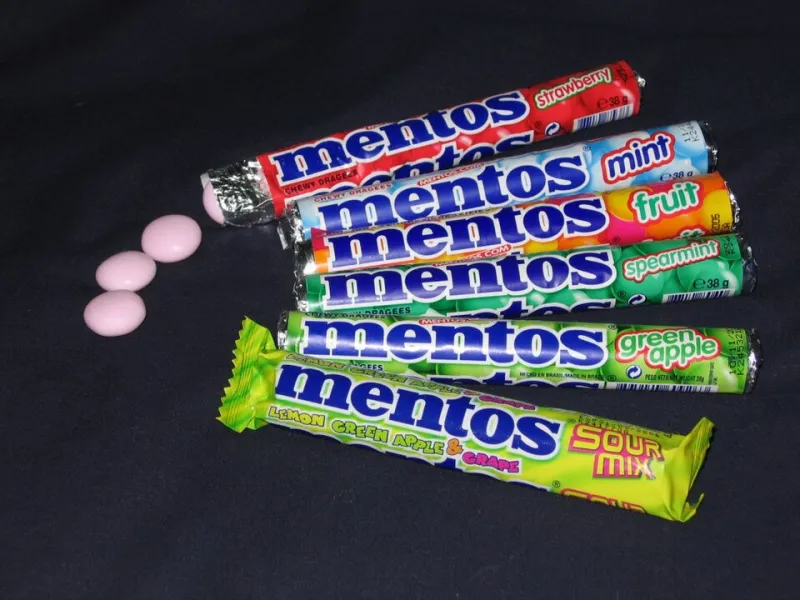
- Wrapped chews and taffy. Individually wrapped caramels, saltwater taffy, fruit chews. Cheap, sturdy, and they hold up for weeks.
- Hard candy and lollipops. Good for the slower days, and a lollipop behind day 24 is a classic for a reason.
- Sour and fruity. Gummies, sour belts cut into short lengths and rewrapped, freeze-dried fruit. Kids under ten will fight over these, so buy two extra.
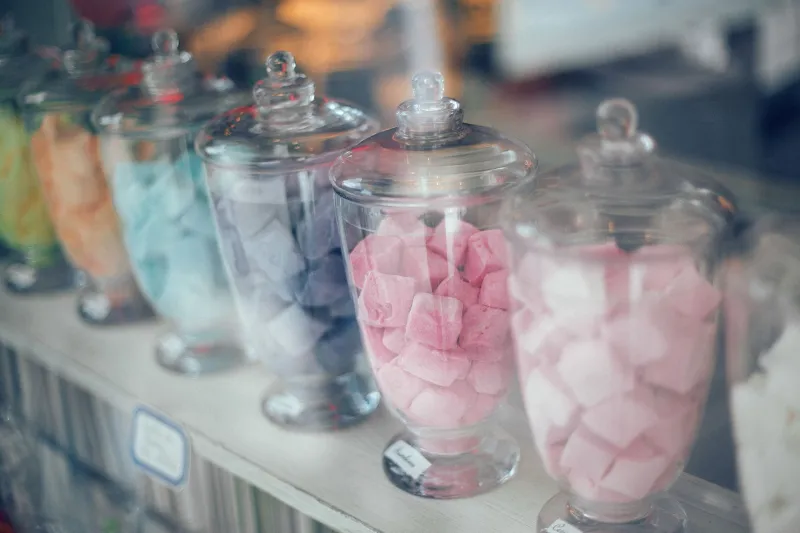
- Bakery extras. This is where it gets fun. A single meringue, a tiny cello bag of mini marshmallows, a small cookie, a caramel-dipped pretzel rod, a chocolate-covered Oreo. Small bakery items make the calendar feel handmade even when half the contents came from the store.
- One or two real showstoppers. A truffle from a local shop, a piece of fancy fudge, a chocolate-dipped strawberry made the night before day 24.
Aim for roughly 60 percent wrapped, shelf-stable candy and 40 percent items that need a little more care. That ratio keeps the calendar easy to build in advance without anything going stale.
Portions, Allergens, and the Fine Art of Not Overdoing It
Twenty-four days of candy is a lot of sugar, even for a kid with a serious sweet tooth. Keep individual portions small — one or two bites per day is plenty, and honestly more festive than a fistful. A single truffle, one marshmallow, three caramels, one cookie. The countdown is the treat; the candy is a bonus.
Allergens deserve real attention, especially if the calendar is a gift. Read labels on every single wrapped item, because "fun-size" assortments often mix peanut, tree nut, milk, soy, and wheat in one bag without obvious visual cues. If the recipient has a nut allergy, skip the mixed bags entirely and build from single-ingredient items you've verified yourself. Keep a written list of what went into each day — it takes ten minutes and saves a lot of awkward phone calls.
Also worth noting: small hard candies and whole nuts are choking hazards for toddlers. If the calendar is headed to a house with a three-year-old, lean on soft items and large-format pieces.
Made vs. Bought: Where to Draw the Line
You do not need to make all twenty-four items, and anyone who tells you otherwise has never done this in a real kitchen in December. A workable split: buy the wrapped candy, make three to six small things yourself, and let one local bakery or candy shop fill in the rest.
Good homemade candidates are items that keep well and look impressive: meringue kisses, marshmallows, caramel corn, bark broken into shards, dipped pretzels, sugar cookies iced with a simple glaze. Skip anything perishable — no fresh cream, no fruit, no ganache that needs refrigeration. If it can't sit in a box on a counter for three weeks, it doesn't belong in an Advent calendar.
Packaging That Makes December 1 Feel Like an Event
The calendar should look good enough that nobody wants to put it away. You don't need woodworking skills.
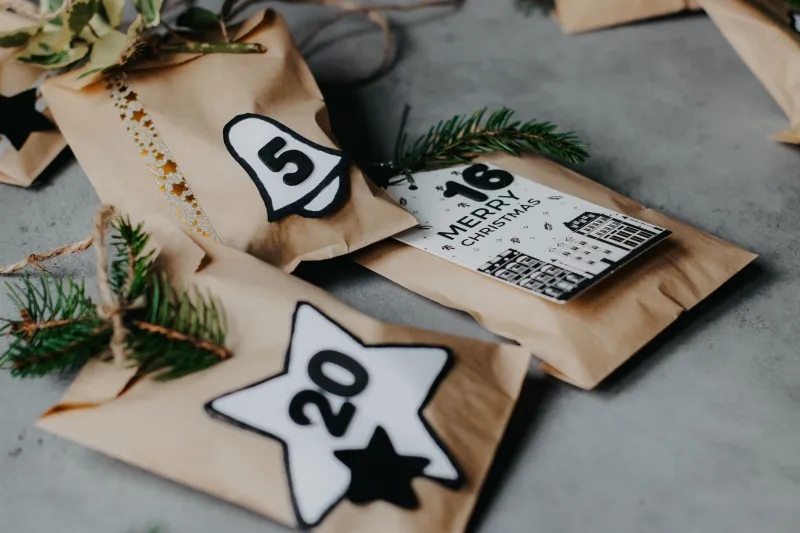
A few approaches that work: a shallow kraft-paper box with 24 small paper bags clipped to a ribbon with mini clothespins; a foam board covered in fabric with paper cups hot-glued in rows; a long ribbon strung across a wall with 24 tiny muslin sacks pinned along it. Number everything clearly — stickers, a Sharpie, stamped tags — because the whole pleasure of an Advent calendar is the counting.
Wrap each item on its own. Tissue paper and a sticker, a small cello bag tied with baker's twine, a paper cup with a circle of parchment rubber-banded over the top. Label anything that needs context: "eat today," "share with your sister," "save for the car ride." Little notes are the cheapest, most remembered part of the whole project.
One practical note: chocolate stored in a warm room will bloom, developing a pale, chalky surface. It's harmless and still tastes fine, but if your house runs warm, keep the calendar in a cool spot and skip the fancy truffles for days you can't guarantee.
A Timeline That Saves Your Sanity
Buy the non-perishables in mid-November. Make the homemade items during Thanksgiving weekend and stash them in airtight containers. Assemble the whole calendar on the last weekend of November, and set it out on the evening of November 30 so December 1 has something waiting.
Twenty-four small wrappers, one good idea, and a little planning. That's the whole trick — and it beats the chocolate box every time.